

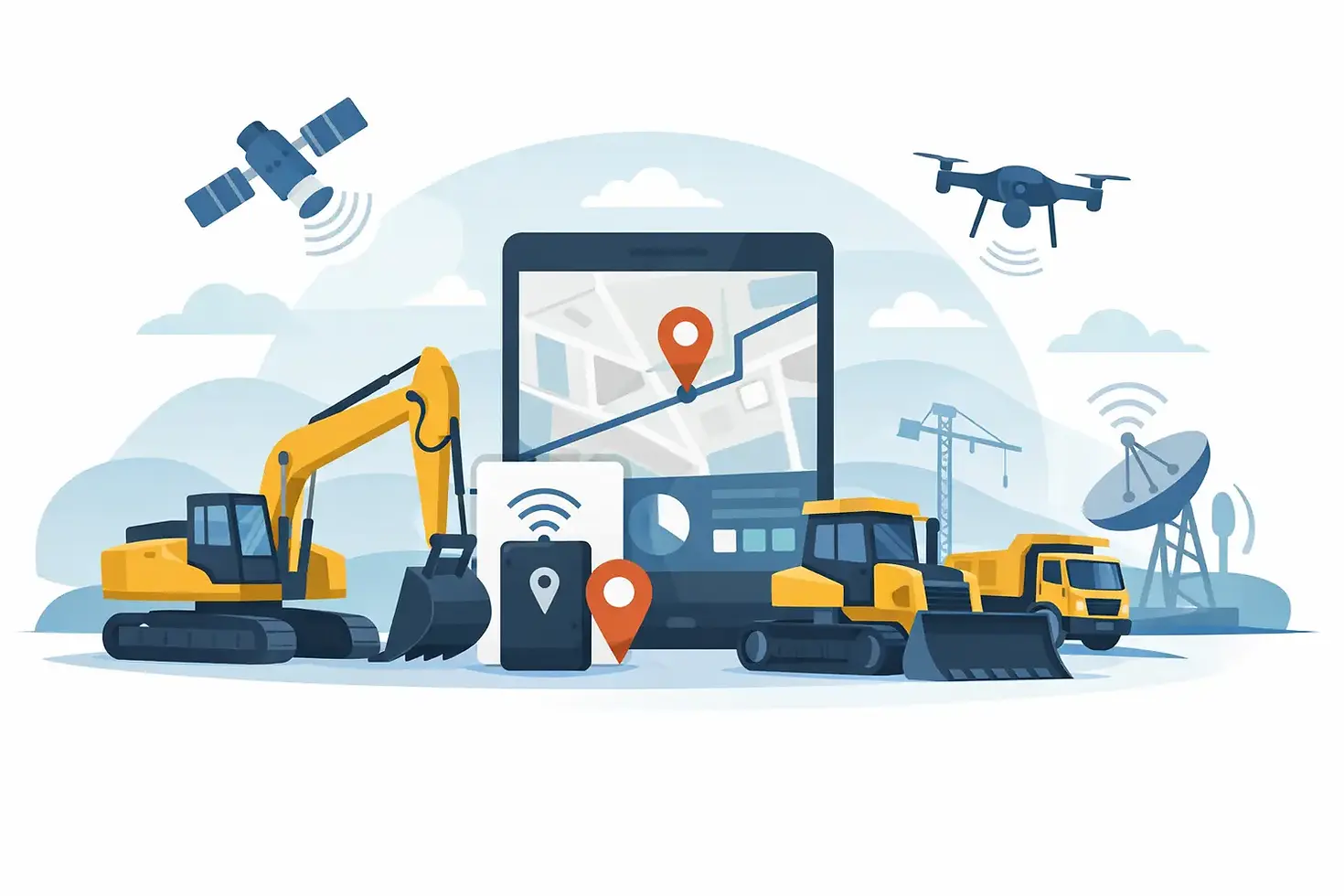
How to Choose Heavy Equipment Tracking Devices
A skid steer disappears from a jobsite overnight, and the real cost is not just the machine. It is the stalled crew, the missed deadline, the rental replacement, and the hours spent figuring out what happened. That is why heavy equipment tracking devices have moved from a nice-to-have add-on to a core control layer for construction, mining, agriculture, and industrial fleets.
For business buyers, the question is not whether tracking matters. The question is which device architecture actually fits the asset, the environment, and the operating model. A basic GPS beacon may be enough for location recovery on a low-use trailer. It will not deliver the same value on a high-hour excavator that needs utilization analytics, geofencing, maintenance planning, and ignition or power event visibility.
What heavy equipment tracking devices need to do
Heavy equipment operates in harsher conditions than standard fleet vehicles. Devices are exposed to vibration, moisture, dust, extreme temperatures, and inconsistent power conditions. They also have to support equipment that may sit idle for days, move unpredictably between sites, or operate in areas with weak network coverage.
That changes the buying criteria. A tracking device for a dozer, generator, compactor, or backhoe is not just a map pin. It is a field device that must keep reporting under stress, integrate into fleet workflows, and produce data that operations teams can actually use.
At a practical level, most buyers are evaluating five outcomes. They want to know where the asset is, whether it is being used, when it crosses a site boundary, how many hours it has run, and whether something abnormal has happened. That abnormal event might be unauthorized movement, battery tampering, excessive idle time, low fuel, or use outside approved working hours.
The main types of heavy equipment tracking devices
Not all devices are built around the same installation model, and this is where many deployments go wrong. The right choice depends on the asset category, power availability, and the depth of data required.
Wired GPS tracking devices
Wired units are usually the strongest option for powered assets such as excavators, loaders, bulldozers, cranes, and service equipment. They draw from the equipment power system and can support richer event logic, more frequent reporting, and peripheral integration.
For fleets that need ignition status, operating patterns, immobilization support, or sensor expansion, wired devices provide more control. They also tend to be better suited to long-term deployment because they reduce battery maintenance compared with self-powered units. The trade-off is installation complexity. Wired devices require proper mounting, access to the electrical system, and installer discipline to protect reliability in the field.
Battery-powered and wireless devices
Battery-powered trackers are valuable when wiring is impractical or undesirable. This applies to trailers, containers, attachments, rented assets, and equipment where drill-free or fast installation matters. Wireless deployment also helps when resale channels or service providers need to scale quickly across mixed asset classes.
The limitation is that reporting frequency and feature depth are usually more constrained by battery life. If an asset moves rarely, that may be acceptable. If the equipment changes status constantly and the business wants minute-by-minute operational visibility, a wireless tracker may not be the best fit on its own.
CANBUS and equipment data integration
For advanced use cases, location is only one layer. Many fleets also want direct access to machine data, including engine hours, fault codes, fuel consumption, RPM, and operating status. This is where CANBUS-capable hardware or equipment interface expertise becomes important.
Not every heavy asset exposes usable data in the same way, and not every telematics device can interpret it consistently across brands and models. Buyers should treat machine data capture as a capability that depends on both hardware design and integration experience. When it works well, it improves preventive maintenance, utilization analysis, and service scheduling. When it is poorly matched, it creates gaps, exceptions, and deployment friction.
What to evaluate before you buy
A product sheet can make most devices look similar. In deployment, the differences become obvious very quickly.
Ruggedization matters more than feature count
If the device cannot survive the environment, the rest of the specification is irrelevant. Housing strength, ingress protection, vibration tolerance, operating temperature range, and connector quality should all be examined closely. Heavy equipment creates a harsher electrical and physical environment than passenger cars, so field reliability has to come first.
This is especially important for fleets operating across multiple climates or in sectors such as mining, waste, and construction where dust, impact, and long duty cycles are normal. Device replacement costs are rarely limited to hardware. They include technician time, service interruption, and customer dissatisfaction.
Power strategy affects reporting quality
A device with excellent battery life may still be the wrong choice if the reporting logic is too conservative for the use case. Conversely, a high-frequency wired unit may be excessive for a low-value attachment that only needs theft recovery.
Buyers should define what events matter most. Is the priority real-time movement alerts, daily location pings, engine-hour capture, or utilization trends by site? Once that is clear, the device power model can be matched to the operational requirement instead of the other way around.
Connectivity is a deployment issue, not just a spec
Global 4G support is important, but so is network fallback behavior, SIM strategy, antenna design, and the device’s ability to maintain reporting consistency across regions. For partners deploying across multiple countries or serving mixed coverage areas, connectivity resilience is a real commercial issue.
This is one reason many telematics providers favor hardware platforms that can be configured for local market needs rather than fixed, one-size-fits-all units. The more varied the operating footprint, the more valuable that flexibility becomes.
Heavy equipment tracking devices and operational ROI
The business case usually starts with theft prevention, but that is rarely where the long-term value ends. Once equipment data is visible, operators can make better decisions about dispatch, maintenance timing, fuel use, and fleet sizing.
Underutilization is a common example. A company may believe it needs additional machines when the real problem is poor asset distribution between sites. Tracking data can show that one excavator is overbooked while another sits idle for most of the week. That changes capital planning.
Unauthorized usage is another area where simple alerts create measurable savings. If a compact loader is being run after hours or moved outside a geofenced zone, operations teams can act immediately instead of discovering the issue after fuel loss, damage, or theft. The faster the alert, the smaller the downstream cost.
Maintenance planning also improves when engine hours or operating patterns are captured accurately. Service intervals become based on real usage rather than estimates, which reduces both overdue maintenance and unnecessary service events. Over time, that supports higher uptime and better lifecycle management.
Integration often decides long-term success
A tracking device should not become an isolated data source. For service providers, enterprise fleets, and OEM-adjacent programs, the device has to work within a broader telematics stack that may include fleet software, security workflows, driver apps, maintenance systems, and customer-facing portals.
That is why API readiness, protocol flexibility, and support for peripherals matter as much as the core hardware. A well-built device with weak integration support can slow down deployment and limit resale potential. By contrast, a configurable platform backed by engineering and manufacturing depth gives partners more room to tailor solutions by region, vertical, or customer segment.
For buyers evaluating scale, it also makes sense to ask how the provider handles hardware consistency, firmware updates, quality assurance, and customization requests. In heavy equipment, deployment success often depends on those back-end capabilities as much as the front-end feature set.
Choosing the right fit for your fleet
There is no single best answer across all heavy asset categories. A rental fleet may prioritize fast installation and tamper alerts. A construction group may focus on engine-hour accuracy and geofencing. A telematics service provider may need a hardware family that supports both wired and wireless installations under one platform. It depends on asset mix, service model, and how much operational data the business intends to use.
The strongest buying approach is to start with the use case, not the device label. Define whether the asset needs basic location tracking, theft recovery, utilization monitoring, sensor expansion, or deep machine data integration. Then assess installation constraints, power availability, ruggedization, and software compatibility.
For partners building telematics programs at scale, that usually leads to a portfolio approach rather than a single SKU. A serious hardware strategy accounts for different equipment classes, different duty cycles, and different customer expectations. That is where manufacturers with in-house R&D, field-proven hardware, and customization capability bring a real advantage.
ERM Telematics works in exactly this space, where hardware decisions affect not only visibility, but uptime, service quality, and partner growth. The right device should do more than report coordinates. It should hold up in the field, fit the asset, and give your team better control of the operation the moment it goes live.
When heavy equipment is expensive, mobile, and constantly exposed to risk, better visibility is not a reporting feature. It is an operational safeguard that pays for itself every time a machine is found faster, used more efficiently, or kept working instead of waiting for answers.


