

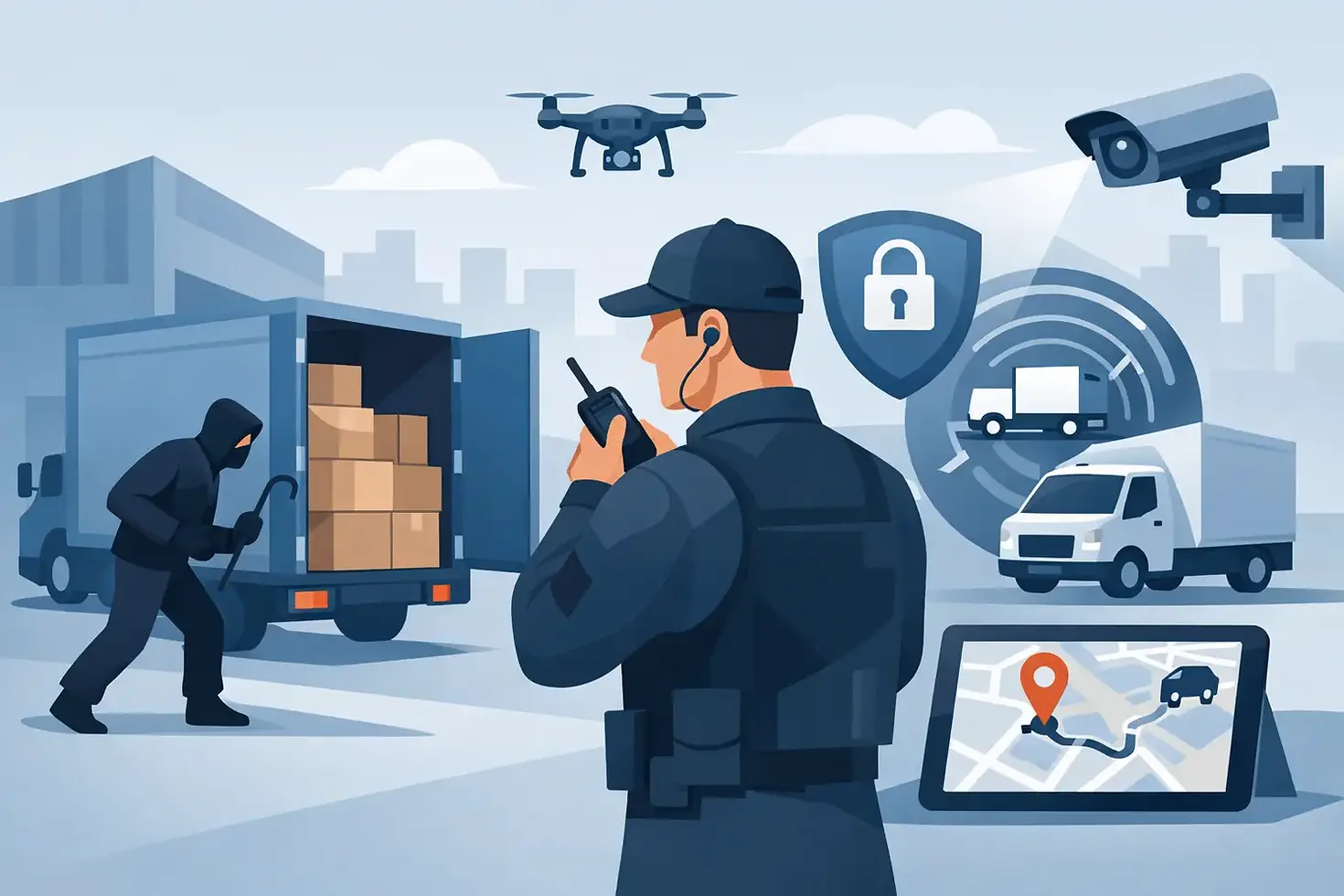
How to Prevent Cargo Theft Across Your Fleet
Cargo theft rarely begins when a trailer door is opened. It begins earlier, when criminals identify a predictable route, an unattended stop, a weak handoff process, or a vehicle that cannot be located quickly. Learning how to prevent cargo theft requires more than fitting a tracker or telling drivers to stay alert. Fleet operators need a layered control model that makes cargo harder to target, harder to access, and faster to recover.
For fleets, logistics providers, and telematics partners, the goal is not simply to reduce theft incidents. It is to maintain operational control when a vehicle, trailer, container, or high-value asset moves outside the expected plan. That means combining physical security, operational discipline, real-time visibility, and a defined response process.
How to Prevent Cargo Theft With Layered Controls
No single device or policy eliminates cargo theft. A hardened padlock can be bypassed, a driver can face an unexpected delay, and a GPS location alone may not provide enough evidence to act quickly. The most effective programs use overlapping controls, so one failure does not expose the entire shipment.
Start by categorizing cargo according to theft risk. Electronics, pharmaceuticals, food and beverage, construction equipment, metals, apparel, and tobacco products often require stricter controls than general freight. Value is only one factor. Cargo that is easy to resell, easy to unload, or difficult to trace can present a higher risk even when the invoice value is moderate.
Risk classification should influence route planning, parking rules, alert configurations, driver instructions, and escalation requirements. A fleet moving routine palletized goods may need standard monitoring. A truck carrying high-value, time-sensitive cargo may require continuous tracking, approved-stop enforcement, remote immobilization capability where legally and operationally appropriate, and an active monitoring team.
Build security into dispatch and route planning
The route plan is a security control, not merely an efficiency tool. Dispatchers should define approved corridors, delivery windows, fuel stops, secure parking locations, and contingency instructions before departure. This reduces the number of decisions a driver must make under pressure and gives operations a clear baseline for identifying exceptions.
Geofencing is particularly valuable when it is configured around actual operating conditions. Create zones for customer sites, terminals, cross-docks, approved fuel stations, secure lots, and common rest areas. Alerts for unauthorized movement, unplanned stops, route deviation, or extended idling outside approved locations can help a team distinguish normal delays from potential theft events.
The trade-off is alert volume. Overly broad geofences and low alert thresholds create noise, encouraging operators to ignore notifications. A better approach is to tune rules by cargo class, route, time of day, and vehicle type. A 20-minute stop may be normal at a known distribution center but concerning at an isolated location near a highway exit.
Protect the tractor, trailer, and cargo separately
A tractor tracker does not always protect a trailer once it has been dropped. Likewise, tracking a trailer does not confirm that the load remains intact. Security architecture should reflect how the fleet actually operates.
For powered vehicles, concealed GPS telematics devices can provide live location, ignition status, tamper notifications, and vehicle diagnostics. For trailers and unpowered assets, independent battery-powered trackers allow location monitoring even when the tractor is disconnected. Door sensors, cargo-area sensors, and electronic seals can add visibility into unauthorized access, while coupling or uncoupling events can identify unexpected trailer separation.
These technologies are most effective when their signals are connected in one platform or workflow. A trailer movement alert, for example, carries more value when operations can immediately see whether the tractor is authorized, whether the trailer is within a planned geofence, and whether a door-open event occurred at the same time.
Physical controls still matter. High-security locks, kingpin locks, hardened door hardware, and secure parking practices increase the time and effort required to access equipment. They are deterrents, not guarantees. Their purpose is to slow an intrusion long enough for detection, verification, and intervention.
Use Telematics to Detect Exceptions Early
Telematics turns cargo security from a retrospective investigation into an active operating process. The highest-value information is not the map dot itself. It is the exception to expected behavior.
A useful monitoring strategy combines location, movement, ignition, power status, geofence events, and sensor inputs. Depending on the equipment and use case, fleets may also monitor harsh driving events, CANBUS data, door status, temperature, and auxiliary power. These data points help establish whether a vehicle is being operated normally, moved without authorization, or interfered with while parked.
Set alert priorities that match the urgency of the event. A routine route deviation may trigger a dispatcher notification. A high-value trailer moving after hours, an ignition event at an unauthorized location, or a tracker tamper alert should trigger immediate verification and escalation. Alerts must reach a person or monitoring center capable of acting, particularly outside standard operating hours.
Device selection matters here. Cargo security deployments often operate in difficult conditions: long idle periods, remote areas, metal-heavy trailer environments, power interruptions, and deliberate attempts to locate or disable equipment. Rugged hardware, dependable cellular coverage, backup power, anti-tamper design, and flexible installation options should be evaluated as operational requirements, not optional specifications.
ERM Telematics supports this approach with configurable vehicle and asset-monitoring hardware designed for fleet, trailer, and specialized mobility deployments, allowing partners to build monitoring services around their own platforms and response models.
Establish a response process before an alert occurs
An alert without a response playbook is only a record of a problem. Every fleet should define who verifies an event, who contacts the driver, who notifies the customer, and when law enforcement or recovery resources are engaged.
For suspected theft, speed and accuracy are both essential. The first action is usually verification: confirm the vehicle identity, driver assignment, planned location, and recent communications. If the driver cannot verify the movement or access event, operations should preserve the latest location, direction of travel, device status, and vehicle details for escalation.
The response workflow should avoid creating additional risk for drivers. Drivers should not be instructed to confront thieves or recover a vehicle themselves. Their role is to follow safety procedures, communicate facts, and move to a safe location when possible. Recovery should be coordinated by trained personnel and local authorities.
Test this process periodically. Tabletop exercises reveal common gaps, such as outdated contact numbers, unclear decision authority, missing trailer identifiers, or no process for accessing location data after business hours. A response plan that has never been tested tends to fail when minutes matter.
Strengthen Driver and Facility Discipline
Drivers are a critical part of cargo security, but security cannot depend on individual vigilance alone. Clear rules, practical training, and dispatch support reduce uncertainty in the field.
Drivers should know which stops are approved, when they must notify dispatch, how to inspect seals and doors, and what to do if they suspect surveillance or tampering. They should be trained to avoid unsecured parking whenever possible, especially immediately after pickup, when criminals may have followed a shipment from the origin facility.
Facilities need comparable discipline. Confirm trailer numbers and seal numbers at every handoff. Control access to loading areas. Require documented release authorization before a vehicle or trailer leaves the yard. Fraudulent pickup and fictitious carrier schemes often exploit weak identity checks rather than forced entry.
At warehouses and terminals, reconcile physical events with telematics records. If a trailer was reported loaded at 2:00 p.m., its location, door events, and departure time should support that record. This creates a stronger chain of custody and makes discrepancies visible sooner.
Measure the Security Program, Not Just Theft Losses
A mature cargo-security program tracks leading indicators, not only confirmed thefts. Monitor unauthorized stop alerts, route deviations, unapproved after-hours movements, device tamper events, response times, recovery times, and recurring high-risk locations. Patterns in these data can identify a weak route, an inadequate parking policy, or a training issue before a major loss occurs.
It also helps to review false alerts. If operators repeatedly dismiss a certain alert type, the issue may be poor rule design rather than poor operator performance. Adjusting thresholds, geofences, and vehicle profiles is part of operating a telematics-based security system effectively.
Cargo theft prevention is ultimately a control problem. When fleet teams can verify where assets are, detect when behavior changes, and act through a practiced response process, criminals face a less predictable and less profitable target. The strongest next step is to examine one high-risk route or cargo category and build the controls around its real operating conditions.


